


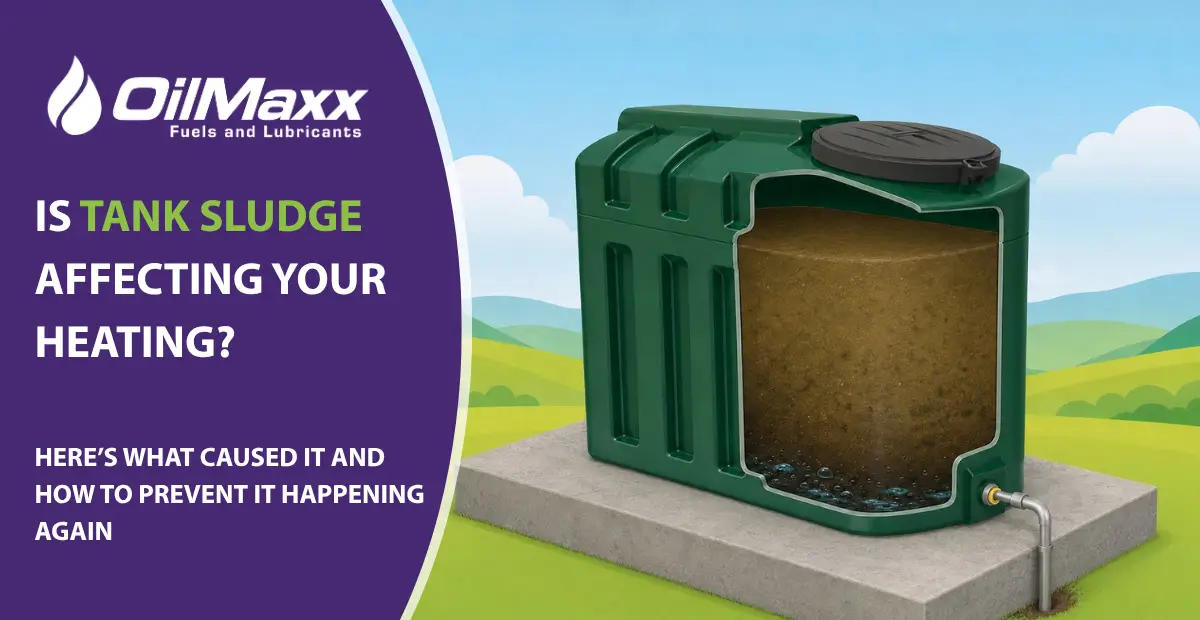
Heating oil tank sludge develops gradually and is normally hidden from view. Sediment, water, rust and other material can collect at the bottom of a tank over time, eventually forming a dark residue.
Sludge may remain beneath the usable oil without affecting your heating. However, if it reaches the tank outlet, filter or fuel line, it can restrict the supply of oil to your boiler.
Although it may not be possible to prevent every deposit from forming, regular tank checks and sensible heating oil management can reduce the risk of sludge causing problems.
What is heating oil tank sludge?
Heating oil tank sludge is the residue that accumulates at the bottom of a domestic oil tank. It may contain sediment, rust, dirt, water and material created as stored fuel ages.
As this material is heavier than heating oil, it settles at the lowest point in the tank. It can remain unnoticed until it is disturbed or begins to enter the fuel supply.
A small amount of settled material will not necessarily affect your heating. Problems are more likely when the build-up reaches the tank outlet or moves into the filter and fuel line.
What causes sludge to develop?
Sludge does not have one single cause. It usually develops through a combination of factors over an extended period.
Water inside the tank
Water can enter through damaged seals, loose lids, faulty vents, cracks or condensation. Because water is heavier than heating oil, it sinks to the bottom of the tank.
Water may contribute to corrosion in steel tanks and create conditions in which microbial growth can develop. This material can add to the sludge already present.
Water and sludge are related, but they are not the same problem. OilMaxx has further information about water contamination on our heating oil tank page.
Dirt and debris
Dirt, insects and other unwanted material may enter through an unsecured filling point, inspection cap or vent. This is why access points should be kept secure and checked regularly.
Keeping the area surrounding the tank clear also makes it easier to identify missing fittings, damage or leaks.
Corrosion and ageing
Steel tanks can corrode as they age, particularly when water is present. Small rust particles may settle at the bottom and contribute to the residue.
Heating oil may also remain in a tank for months, especially in properties that are empty for part of the year or use little heating during summer. Fuel stored in a clean, secure and well-maintained tank can remain usable for an extended period, but existing water, dirt or tank deterioration can affect its condition.
Does allowing your tank to run low cause sludge?
A low heating oil level does not create sludge by itself. However, it can make an existing build-up more relevant.
If the tank runs out completely, air may enter the fuel line and prevent the boiler from restarting normally. A new delivery can also disturb sediment that had settled at the bottom.
If your boiler begins locking out or the filter becomes blocked after a delivery, contact a qualified heating engineer. The timing may point towards disturbed sediment, but it does not mean the delivered fuel was contaminated.
Monitoring your usage and arranging a delivery before you run out can help. OilMaxx’s Budget Payment Plan and Smart Tank service monitors the tank remotely and allows a delivery to be arranged when the oil reaches the agreed level.
How can you reduce the risk of sludge?
You cannot see everything happening inside your heating oil tank, but several practical steps can help protect it.
Check the tank regularly
Walk around the tank periodically and look for:
- Cracks, splits or bulging
- Rust or corrosion
- Loose or damaged lids
- Damage around vents, gauges and fittings
- Oil staining or damp patches
- An unusual smell of oil
- Changes in the surrounding ground or vegetation
Do not lean on, climb onto or strike the tank while inspecting it. Arrange professional advice if anything appears damaged or has changed.
Our heating oil tank inspection tips explain the basic checks homeowners can carry out between professional inspections.
Keep access points secure
Check that the filling point, inspection lid, vents and gauge are secure and in good condition. Damaged or missing components may allow rainwater, dirt or insects into the tank.
Never block a tank vent or make alterations without professional advice.
Monitor your oil level
Check your gauge throughout the year, including during summer when oil use is lower. This will help you understand your normal consumption and reduce the chance of unexpectedly running out.
A sudden or unexplained fall in the level should be investigated. It could indicate a faulty gauge, increased usage, theft or a leak rather than sludge.
Arrange regular servicing
Boiler servicing gives an engineer an opportunity to examine the filter and other accessible parts of the fuel supply. If dark residue or debris is repeatedly found, ask whether the tank and fuel line should also be assessed.
GOV.UK guidance on storing oil recommends having your tank inspected annually by someone registered with a competent person scheme. It also advises checking the tank regularly for damage or leaks.
Our heating oil tank checklist provides a useful starting point for checks between professional inspections.
Investigate recurring faults
One boiler lockout or blocked filter does not prove that sludge is present. These problems have several possible causes.
However, a filter that repeatedly blocks, unreliable heating or the same fuel supply fault returning after repair deserves closer investigation. Cleaning or replacing the filter may restore the heating temporarily, but it will not resolve material continuing to enter from the tank.
What should you do after a delivery?
The incoming fuel can disturb sediment that was already resting at the bottom of the tank. Where practical, allow the contents time to settle before operating the heating, following guidance from your boiler manufacturer or heating engineer.
If the boiler locks out or the heating becomes unreliable:
- Avoid repeatedly pressing the reset button
- Check the external tank gauge
- Note when the problem began
- Contact a qualified heating engineer
- Tell the engineer that the problem followed a delivery
- Contact OilMaxx if you have a specific concern about the delivery
An engineer should assess the boiler, filter, fuel line and tank before deciding whether sediment is responsible.
Can sludge be removed?
Heating oil tank sludge can be removed, but cleaning should be carried out by a specialist. Do not attempt to enter the tank, pump out the fuel or disturb material at the bottom yourself.
Depending on the condition of the tank and fuel, a specialist may recommend:
- Professionally cleaning the tank
- Recovering or treating usable fuel
- Removing contaminated material
- Repairing associated components
- Replacing an old or deteriorating tank
Adding more heating oil will not remove an existing build up. It may also disturb settled material during the delivery.
OilMaxx works with qualified tank professionals and offers tank installation, removal, maintenance and cleaning services. Find out more about our domestic heating oil tanks and tank services.
When should you seek professional advice?
Arrange professional advice if your filter repeatedly becomes blocked, the boiler keeps locking out or an engineer finds dark residue in the fuel supply.
You should also act promptly if the tank is cracked, bulging, corroded or leaking, or if you notice an unexplained fall in the oil level. These signs may indicate a leak or tank failure rather than sludge.
Regular checks, oil level monitoring and prompt attention to recurring faults can reduce the risk of a hidden build up disrupting your heating.
OilMaxx supplies heating oil to homes across England. Get an instant heating oil quote online or contact your local OilMaxx team to arrange your next delivery.