


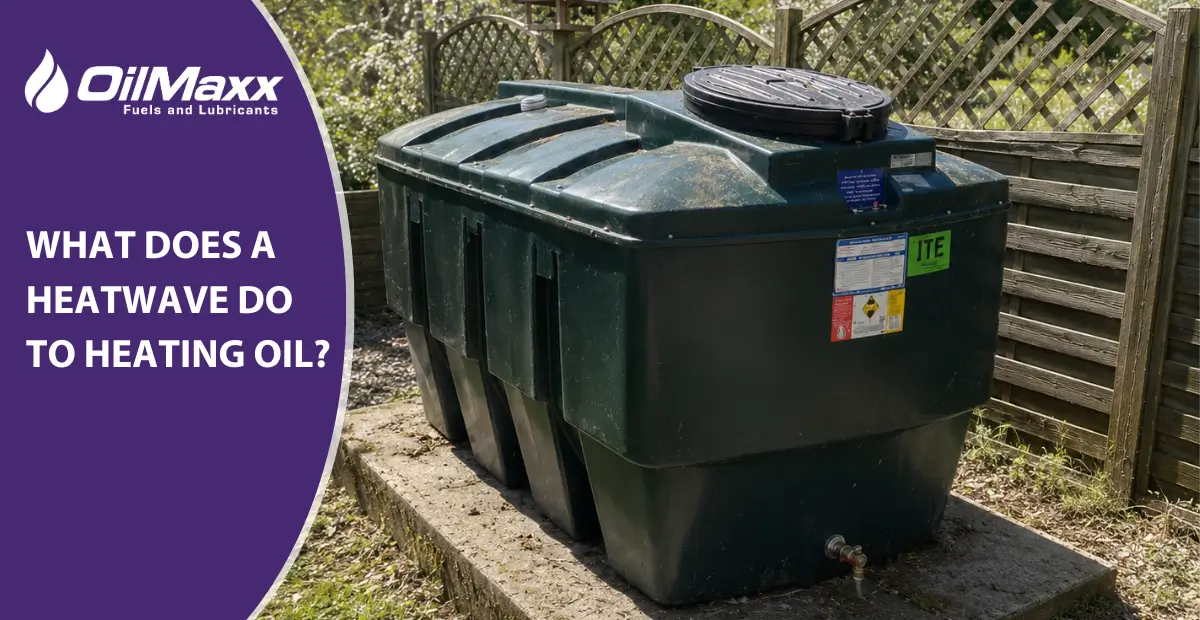
The UK has already experienced several heatwaves in 2026, with temperatures exceeding 35°C in parts of England and Wales and reaching 30°C in southern Scotland.
If your home uses heating oil, you may be wondering whether prolonged heat could affect the fuel in your tank.
Heating oil does not normally become unsafe or unusable during a heatwave. A healthy domestic oil tank is designed to remain outdoors throughout the year. However, strong sunlight and changing temperatures can place additional strain on an older or damaged tank.
Following a few simple checks can help protect your heating oil and identify potential problems before they become more serious.
1. Check your tank for signs of heat damage
A few hot days should not damage a tank that is in good condition. However, years of exposure to sunlight and changing weather can gradually weaken some tanks, particularly older plastic models.
Walk around your tank without touching or leaning against it and look for:
- Cracks, splits or deep scratches
- Bulging or changes in shape
- Fading or discolouration
- Rust or corrosion on a steel tank
- Damage around the lid, gauge or fittings
- Damp patches or oil on the surrounding ground
- A strong or unusual smell of oil
If anything appears to have changed, contact an OFTEC-registered technician or another suitably qualified oil heating professional. Do not attempt to repair or seal a damaged tank yourself.
2. Keep an eye on your heating oil level
Heating oil expands slightly as it becomes warmer. A correctly filled tank should have sufficient space to allow for this normal movement, so expansion should not cause a problem.
Your supplier will calculate how much oil can be delivered safely based on the available capacity of your tank. You should never attempt to fill a heating oil tank beyond its safe working limit.
It is also worth avoiding the opposite extreme. Leaving a tank almost empty for an extended period creates more space for air and moisture inside it, potentially increasing the opportunity for condensation to form.
Check your gauge periodically throughout the summer, even if you are using very little heating oil.
3. Watch for condensation
Condensation can form when the temperature inside a tank differs from the surrounding air. As temperatures rise during the day and fall overnight, moisture in the air inside the tank can collect as water droplets.
Because water is heavier than heating oil, it can settle at the bottom of the tank. A build-up of water may:
- Contaminate the heating oil
- Contribute to corrosion in steel tanks
- Encourage sludge to develop
- Reach the fuel line or heating system
Condensation is more likely to become an issue when there is a large amount of empty space inside the tank. However, you do not need to completely fill your tank simply because hot weather is forecast.
If you suspect that water is present, arrange for the tank to be professionally inspected rather than attempting to remove it yourself.
4. Do not place a temporary cover over the tank
It may seem sensible to protect your heating oil tank from direct sunlight using a sheet or makeshift cover. However, covering or enclosing it incorrectly could restrict ventilation or prevent safe access during a delivery.
Do not attach anything directly to the tank or build an enclosure around it without professional advice.
If you are concerned that your tank receives excessive sunlight, ask a qualified professional whether its location and surroundings remain suitable. Any permanent screening must comply with the relevant access, ventilation and fire-safety requirements.
5. Check the pipework and surrounding area
The tank itself is not the only part of your heating oil system that should be checked during hot weather.
Look at any visible pipework, valves and fittings for signs of damage or leakage. You should also inspect the ground and vegetation nearby for:
- Dark or damp patches
- An oily smell
- Staining around the tank supports
- Dead or discoloured grass
- An unexplained drop in your oil level
Do not climb onto the tank, move pipework or press against the tank walls while carrying out your checks.
6. Continue checking the tank throughout summer
Heating oil use generally falls during summer, particularly when the central heating is switched off. This means the tank can sometimes receive less attention than it does during winter.
However, regular checks remain important. GOV.UK guidance on storing oil advises having an oil storage tank professionally inspected every year and cites Oil Care’s recommendation to check for damage or leaks at least once a month.
An annual inspection can identify problems that may not be obvious from a visual check, including issues with the tank supports, underground pipework or internal condition.
What should you do if your heating oil tank leaks?
If you notice oil leaking from the tank or pipework:
- Keep people and pets away from the area
- Avoid touching or walking through the oil
- Do not wash it into drains or the surrounding ground
- Switch off the oil supply if it is safe to do so
- Contact a qualified professional immediately
- Inform your home insurer where appropriate
Oil spills can contaminate soil, drains and nearby watercourses, so even a small leak should be dealt with promptly.
Does heating oil go off in hot weather?
Heating oil will not normally go off because of a heatwave. When stored in a clean, secure and well-maintained tank, it can remain usable for an extended period.
Water, dirt and other contamination present a greater risk to fuel quality than warm weather alone.
The best way to protect the oil is therefore to maintain the condition of the tank, monitor the fuel level and arrange professional advice when something does not look right.
Keep your heating oil protected this summer
A heatwave is unlikely to cause a sudden problem with a healthy heating oil tank. However, prolonged sunlight and higher temperatures can make existing wear or damage more noticeable.
During hot weather, remember to:
- Check the tank and visible pipework
- Monitor your heating oil level
- Look for cracks, bulging, rust or leaks
- Avoid placing temporary covers over the tank
- Arrange an annual professional inspection
- Seek advice if you notice any changes
OilMaxx delivers heating oil to homes across England. Get an instant quote online or contact your local OilMaxx team to arrange your next delivery.