


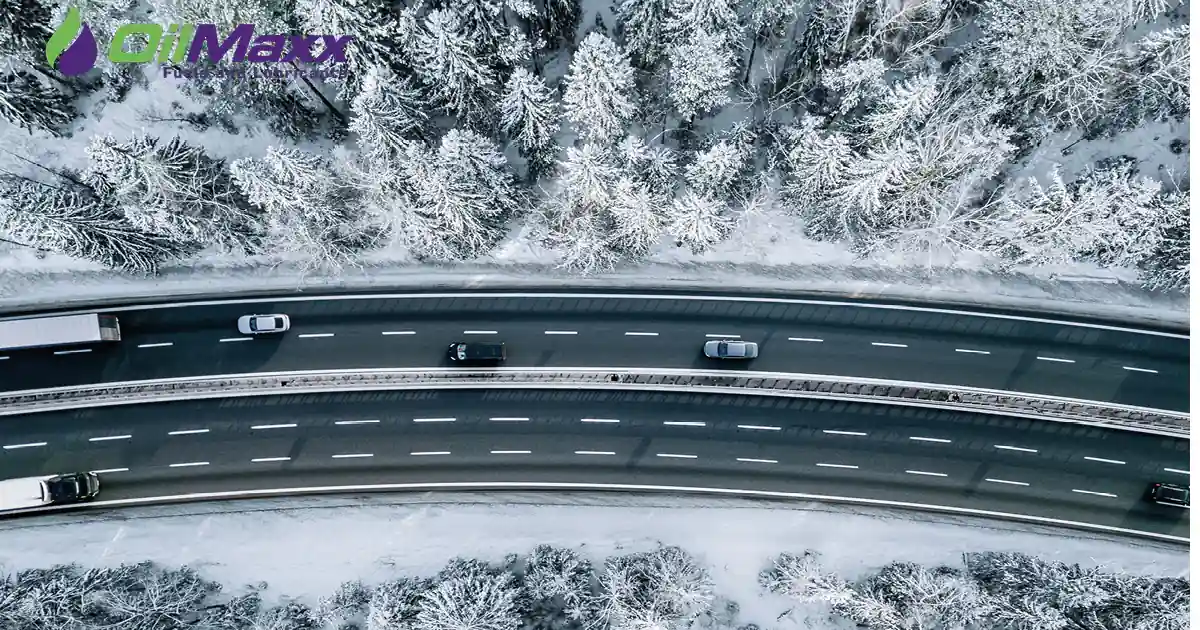
As temperatures drop, fleet managers must proactively ensure their vehicles can withstand the harsh winter conditions and keep fleets operations running smoothly.
Winter weather can severely impact unprepared vehicles, causing fuel issues that can potentially ground the entire fleet. To help businesses combat these challenges, OilMaxx considers how to prepare fleets for winter.
One key aspect of winter fleet preparation is ensuring optimal fuel storage. Check tanks regularly for sludge buildup, as these contaminants can cause blockages and wear within fuel systems.
OilMaxx understands the challenges that winter can pose to the haulage sector and offer expertise and a range of products, including AdBlue and antifreeze, combined with storage and telematics solutions, making OilMaxx the ideal partner to keep moving during winter.
Winter driving tips
In winter, drivers need to keep safe during harsh driving conditions. There are vital points drivers need to consider; we explore them below to help keep drivers informed and prepared.
1. Check the weather forecast.
Understanding if severe weather is forecast will help you plan your journey. Plan your route in detail, and knowing your journey time is essential during winter. Identifying hazards and knowing where you will stop for rests will remove the element of risk as much as possible. The Met Office produces alerts for high-sided and vulnerable vehicles.
2. Check your vehicle.
Thorough checks are essential, but even more so in winter, pay attention to:
- Tyre tread: worn tyres reduce starting traction by 30 – 50 percent. It is good practice not to allow your tyre treads depth to get below 3mm (the legal limit for HGVs is 1mm)
- Frozen brakes: ensure that the brake lines are not frozen and, if defrosted, have not split
- Windows, windscreen wipers and mirrors to be cleared of snow and cleaned to ensure good visibility. Check your windscreen wipers are working correctly to maximise your visibility in poor weather conditions
- Fluid levels: ensure that the vehicle’s fluids (water, oil, power steering fluid, brake fluid, anti-freeze fluid, windscreen wiper fluid and AdBlue) are topped up
- Exhaust: check your exhaust system to make sure it is clear of snow
- Vehicle and trailer body: remove as much snow as possible from the vehicle cab, trailer body, windows, lights, registration plates and doors using a long, clean, nonabrasive snow broom
3. Check your fuel tank.
A full fuel tank helps increase your truck’s weight for better traction. It will also keep you moving in case of delays.
4. Check you have the correct equipment.
Be prepared for every situation:
- De-icer and an ice scraper: it is a legal requirement to ensure your front and rear windscreens are clear of snow and ice before driving
- Warm clothing: carry warm clothing including boots, hat and gloves and consider packing a blanket too
- Torch: don’t rely on the torch in your mobile phone – carry a spare torch
- A shovel and a bag of sand or salt: some minor roads are not treated during severe weather conditions therefore it’s easy for your vehicle to get stuck
- Road atlas: in case your sat-nav doesn’t work
- Extra food and drink: essential in case you end up being stranded for a long period
- Mobile phone charger: carry an “in-vehicle charger” – in the event your mobile phone runs out of battery. Consider taking a portable battery/charging bank.
5. Plan for bad weather.
Driving in hazardous conditions, including snow and ice, heavy rain, windy conditions, fog and flooding. Ensure you understand how each condition can affect your driving and be prepared to take action. Slow down, give space for longer braking distances and use defensive driving techniques: be ready for the unexpected. Anticipate what other drivers might do. It would help if you used headlights when visibility is seriously reduced. This is generally when you cannot see more than 100 metres ahead (328 feet). Using front and rear fog lights can help you keep a safe distance from the vehicle in front and make cars aware of your presence. But remember to switch them off when visibility improves.
Stay safe in bad weather
Following these hints and tips will help keep you safe during bad weather.
Remember to do the following to ensure you are prepared for your journey:
- Check the weather forecast before setting off on any journey using the Met Office website.
- Check your vehicle thoroughly and clear it of snow.
- Ensure you have all the necessary equipment, including suitable clothing and footwear.
Contact OilMaxx We Are Here to Help!
Here at OilMaxx, we are determined to make all of our commercial consumers’ day-to-day lives easier. We offer a large range of fuel tank products and services to ensure that we are providing your every need.
Contact your local Oilfast depot today if you are looking for more information or want to place an order.